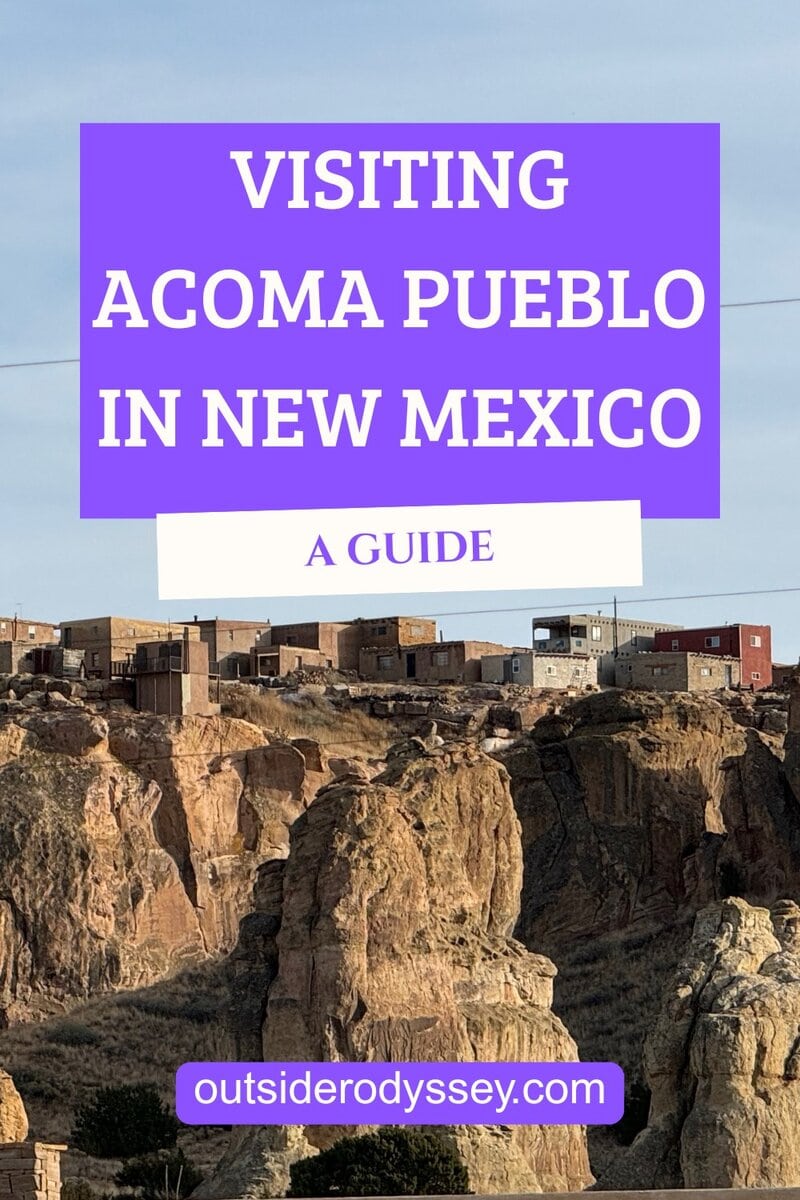

Visiting Acoma Pueblo: Life in the Sky City
When I visited Albuquerque, I took a day trip to Acoma Pueblo, also known as “Sky City,” It’s about an hour away from the city and is absolutely worth the trip. This isn’t really a touristy or historic site, but rather someone’s home, since it is still inhabited today. This was my experience visiting Acoma Pueblo.
This post may contain affiliate links. If you make a purchase through an affiliate link I will earn a small commission at no extra cost to you.
What is Acoma Pueblo?
Acoma Pueblo is one of the oldest continuously inhabited communities in the United States. While fewer than 50 people live on the mesa full-time today, it remains an active and meaningful place for the Acoma people. Like many Indigenous communities in the Southwest, Acoma Pueblo’s history includes centuries of colonization and forced religious conversion, realities that still shape the experience of visiting today.
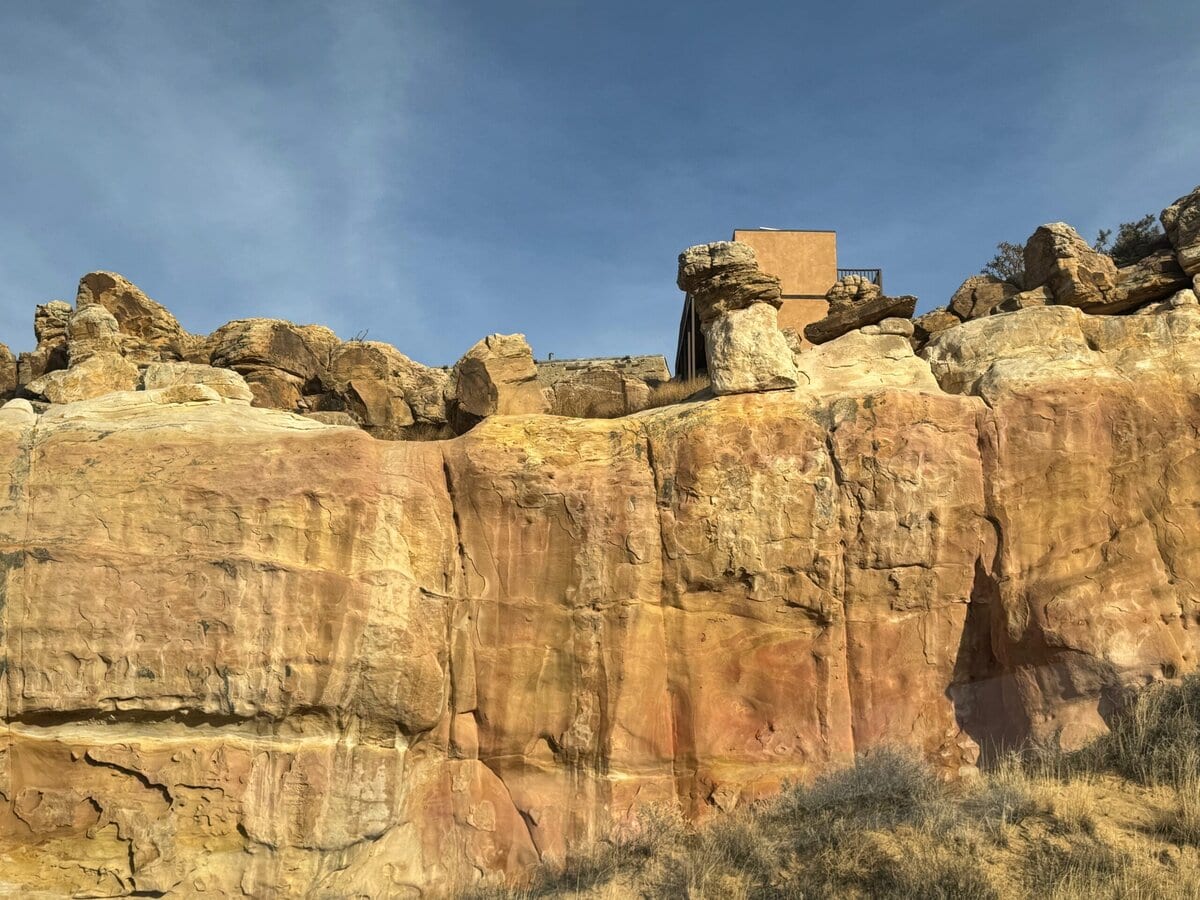
The pueblo sits on top of a 367-foot sandstone mesa, hence the nickname “Sky City.” The only way to visit outside of certain public festivals is by guided tour, which helps protect both the site and the community.
Visiting Acoma Pueblo: What to Know Before You Go
Book your tour here. This also includes admission to the Haak’u Museum and Sky City Cultural Center.
Photography is allowed in some areas, but restrictions are strictly enforced. You’ll be asked not to take photos in certain spaces, including inside the church and the cemetery. This is a living community, so being respectful matters.
This is not a quick roadside stop. Plan to spend a few hours here to experience the tour, museum, and surroundings.
The Tour Experience
A shuttle takes you to the top of the mesa, where the guided walking tour begins. Almost immediately, a sense of isolation sets in along with the feeling that you’re standing somewhere far removed from modern life.
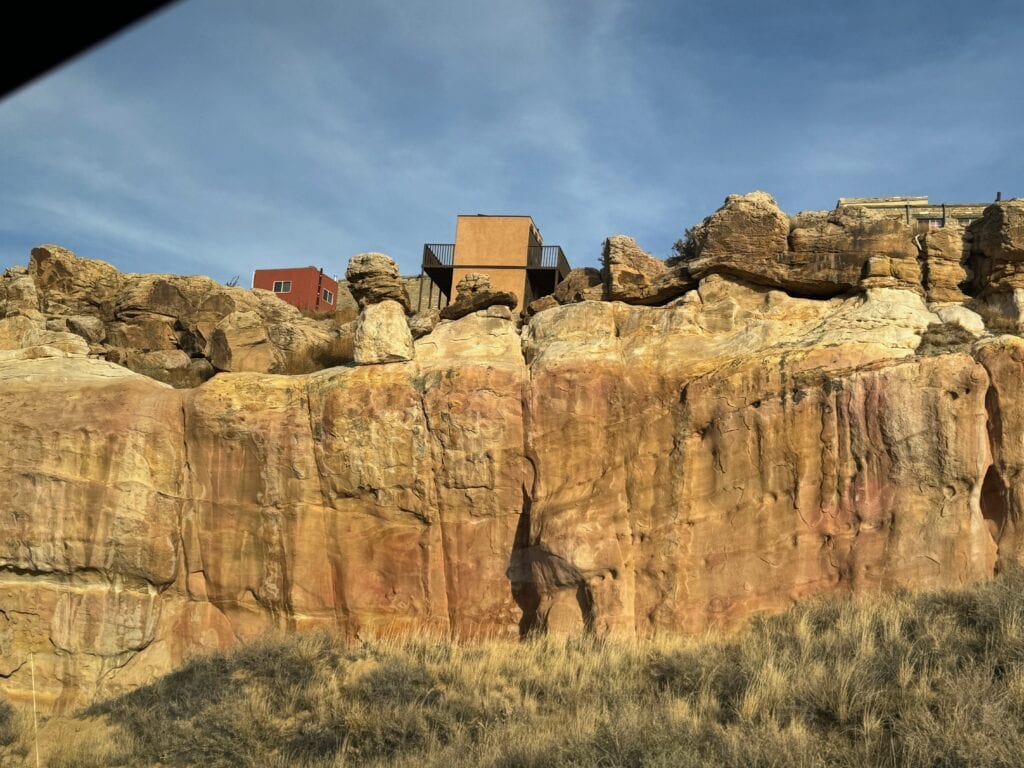
View from the shuttle
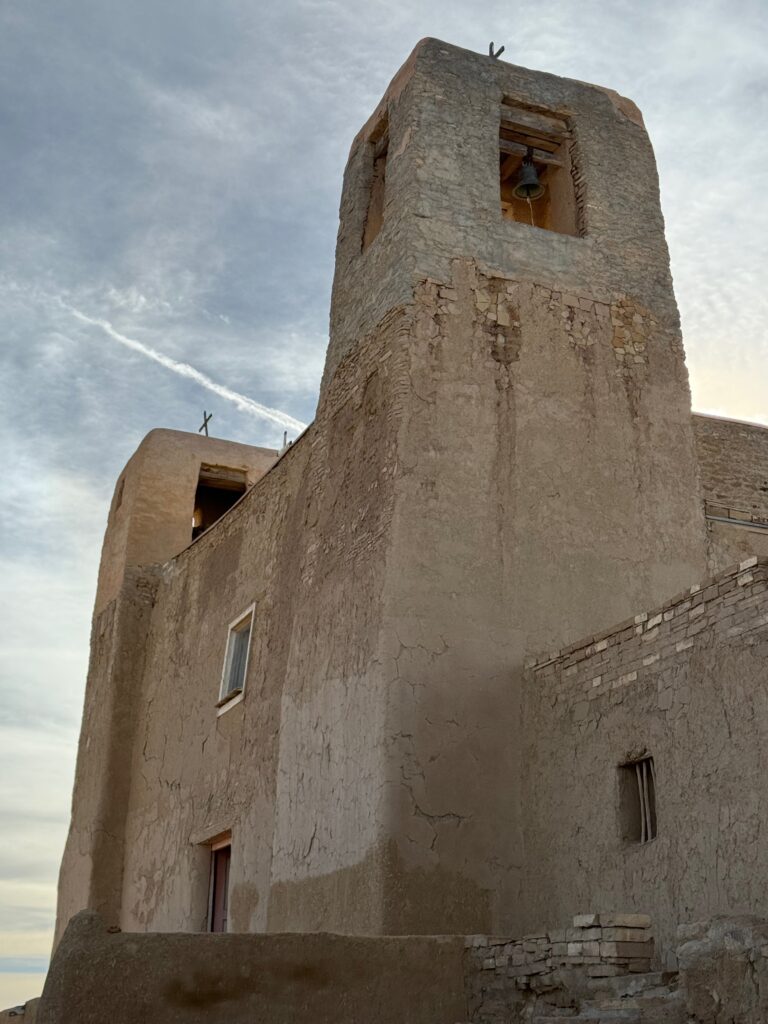
One of the most significant stops on the tour is the San Esteban del Rey Mission Church. The enormous wooden beams used in its construction were carried by the Acoma people from forests about 20 miles away, work performed under Spanish colonial rule. If a beam touched the ground, that was considered sacrilege, and that beam had to be abandoned. Standing there, it’s impossible not to think about the physical toll of that work, and the conditions under which it was done.
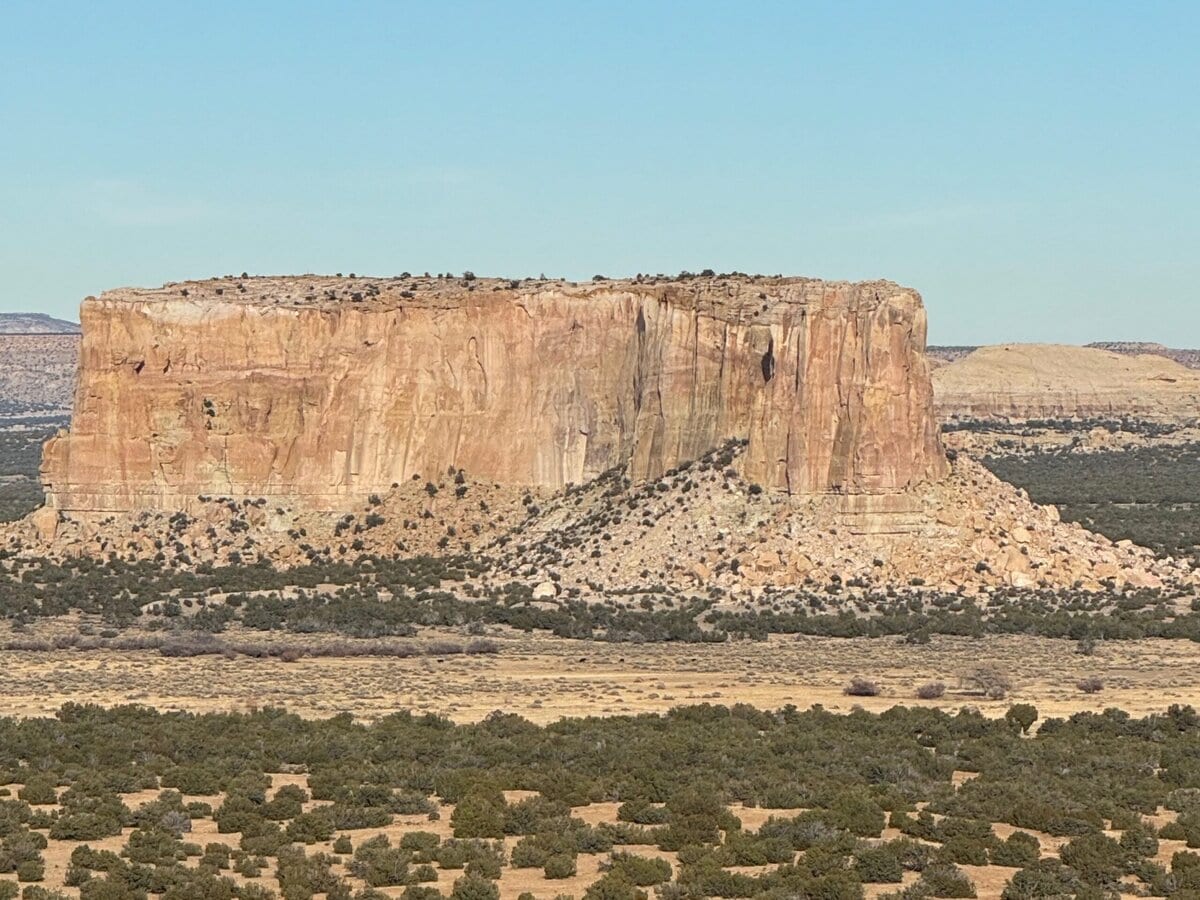
You will see expansive desert views, including one of the old mesa. Sky City used to be on the mesa pictured above, but a storm cut off access, so it was rebuilt on the current mesa.
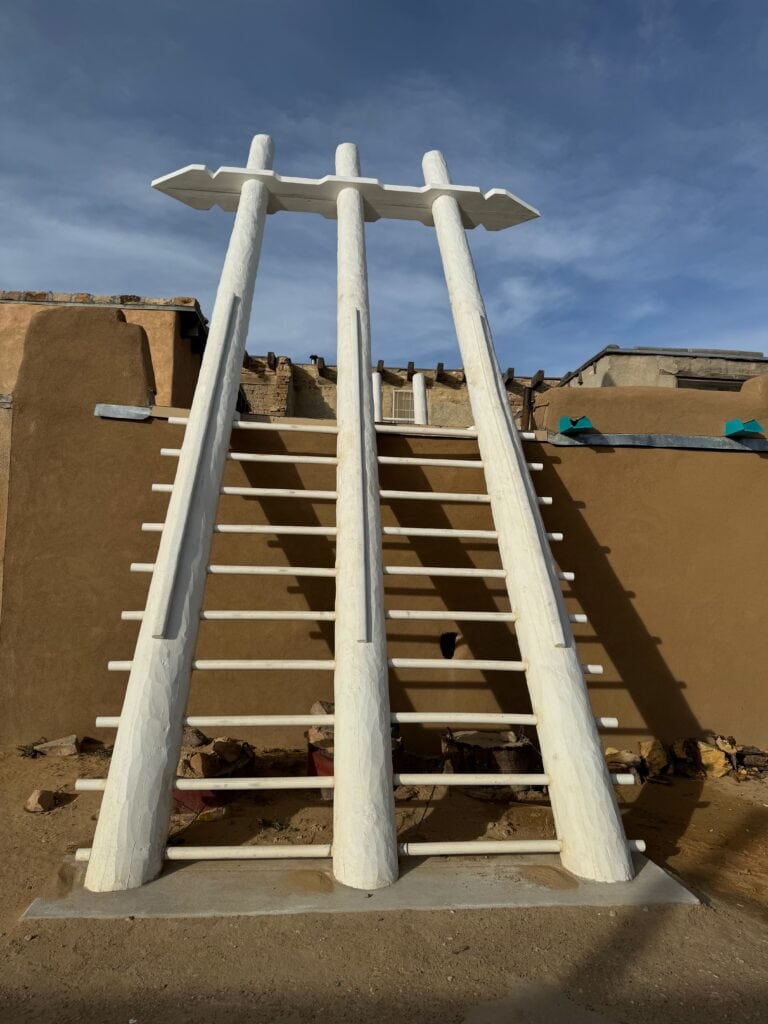
Ladders like the one above were once central to daily life. Traditionally, homes had no ground-level entrances and were entered by a ladder on the second floor. This design made the pueblo easier to defend, as ladders could be pulled up if needed.
Today, most homes have ground-level doors, but ladders are still used to enter upper levels. They’re also used to enter kivas, which are ceremonial spaces. You can see a separate ladder descending into the kiva in the photo above. Visitors are not allowed to climb the ladders or enter the kivas.
Additionally, ladders symbolized movement between earth and sky, a reminder that life in Sky City has always existed between worlds.
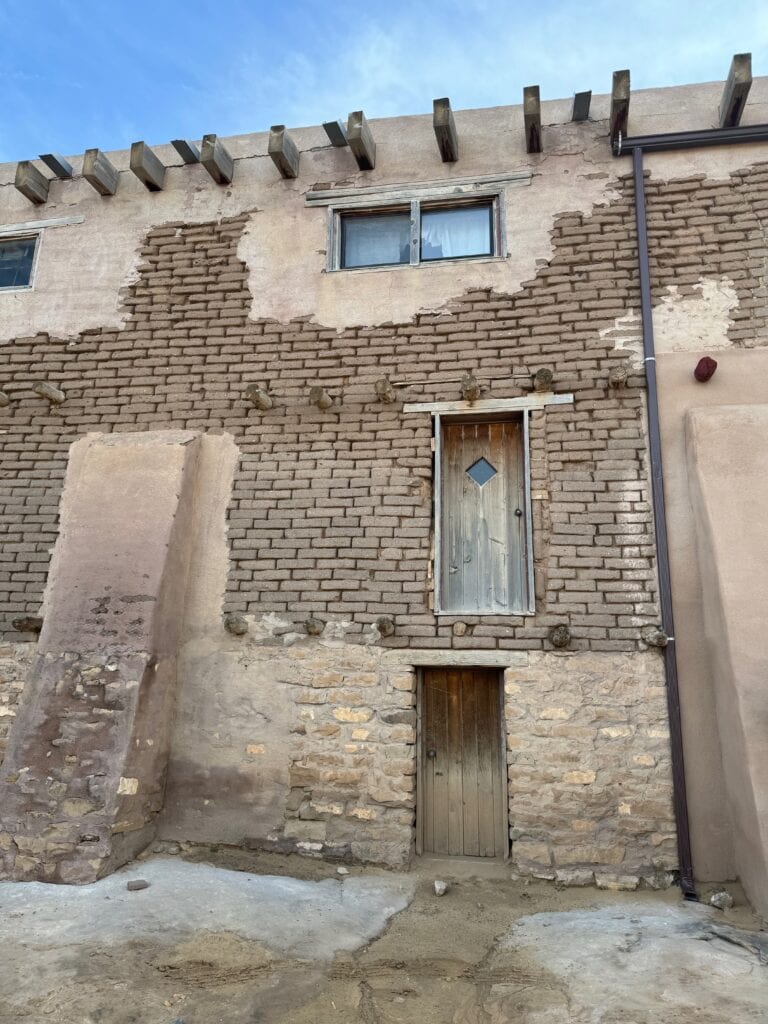
An example of a home that once had only a second story door.
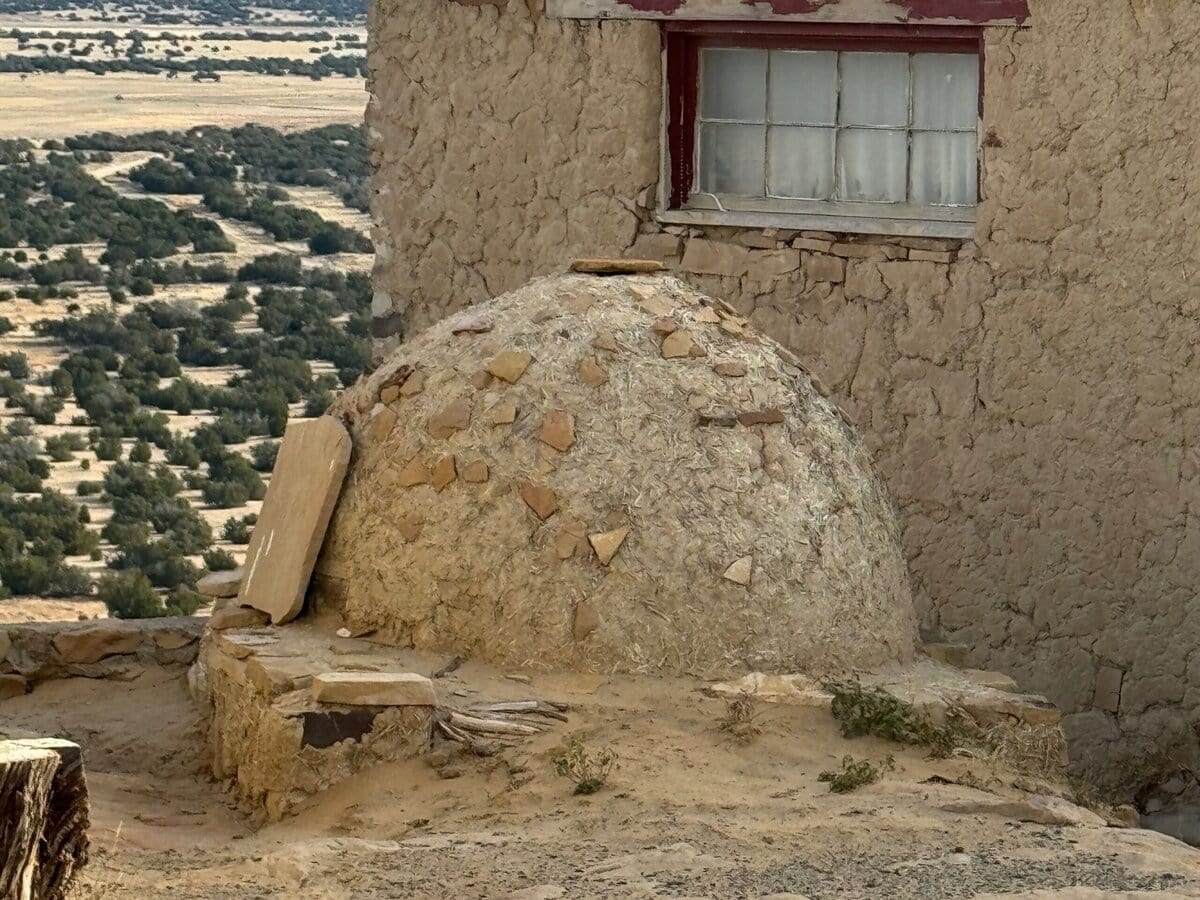
A communal oven. You’ll see a few of these scattered throughout.
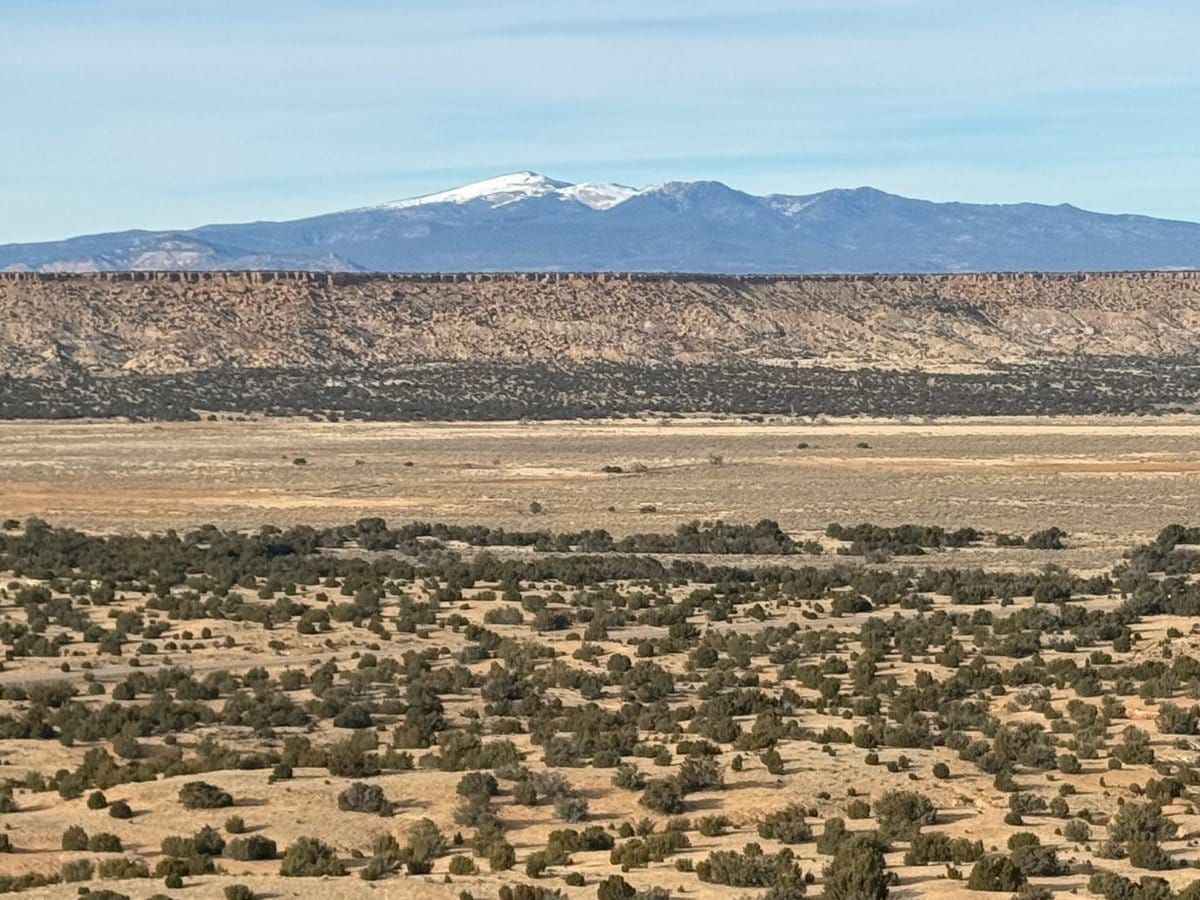
View of Mount Taylor
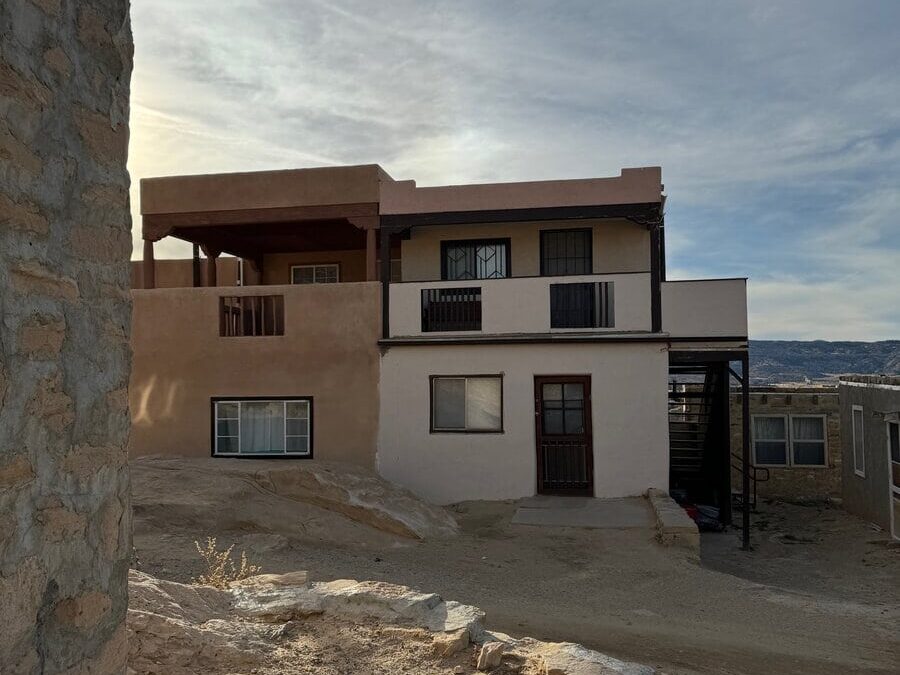
It’s easy to tell which buildings are newer.
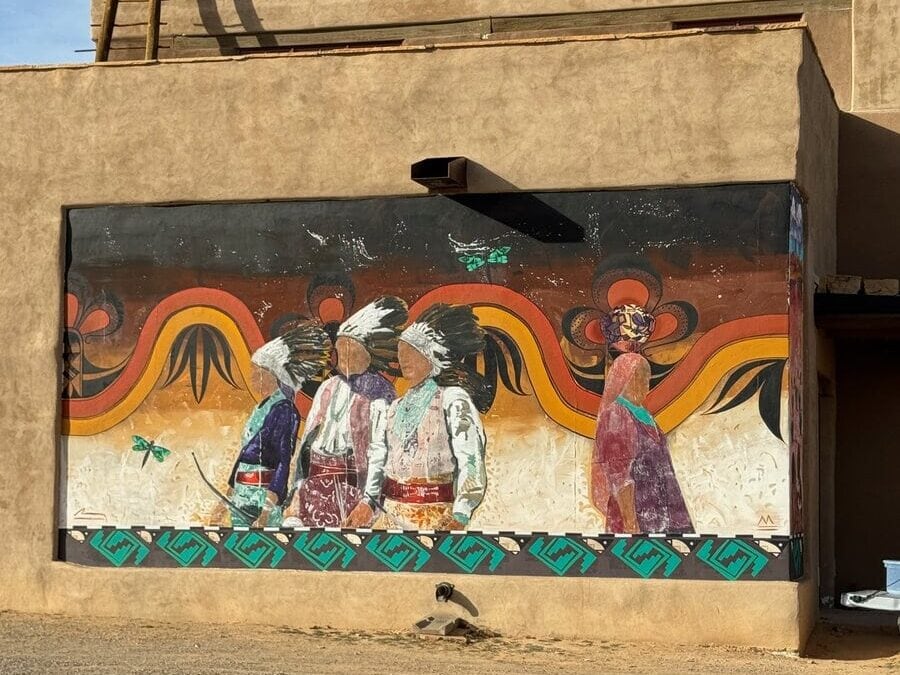
Final Stops and Takeaways
Before leaving, be sure to visit the Haak’u Museum, which provides deeper historical and cultural context, and take time to see the Acoma artists selling pottery. Purchasing directly from artisans is one of the best ways to support the community.
Acoma Pueblo is quiet, peaceful, and beautiful. It’s the kind of experience that sticks with you after you leave and is absolutely worth visiting if you find yourself in New Mexico.
Like this post? Pin it for later!